

Steam Turbine Generator Testing & Inspection Services
Reliable Turbine Services, LLC is a premier OEM generator repair services provider, powered by Fuji Electric, a world leader in steam turbine/generator manufacturing. This relationship brings a wealth of technical and engineering experience to RTS. This enables our personnel to deliver top-quality steam turbine generator inspection services through our GATE 1-2-3 program. Our team also provides 24/7 generator emergent services for generator outages that happen at your facility across the nation.
Every GATE inspection is matched to the customer's generator, ensuring problems are caught early before they lead to bigger repairs. Generators leave RTS ready to run at full power. Our OEM generator repair specialists handle testing, repair, and maintenance, regardless of the generator's size or type.
To find out more about RTS’ OEM Generator Repair Services download our Line Card here.
Click below to find out more.
Siemens
Elliott
Alstom
Mitsubishi
Hitachi
Murray, Terry, Coppus
Allis Chalmers
Have A Question?
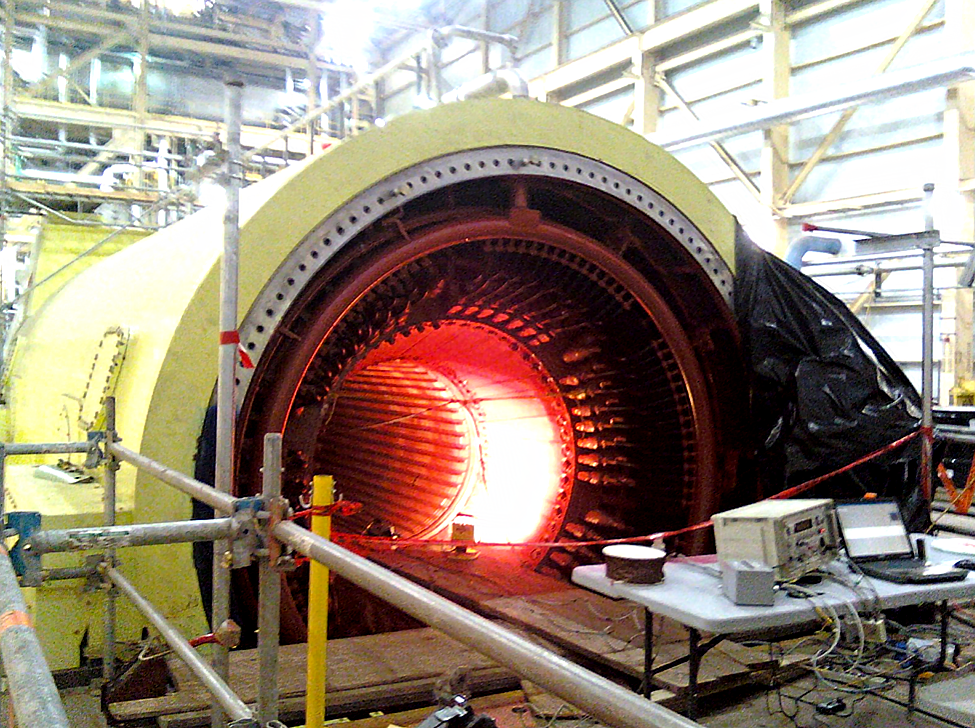
Minor inspection with generator rotor in place
Major inspection (rotor out) with limited testing
Major inspection with extensive testing
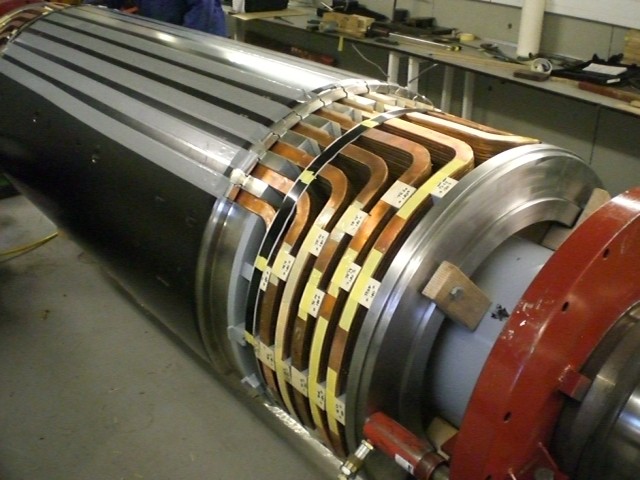
Rotor Services
Brushless exciter test, inspection and complete overhaul
Field ground detector troubleshooting for both RF and Optical systems
Retaining Ring inspection, removal & replacement
Non-destructive testing (NDT) of retaining rings
Collector ring repair, replace, and machining
Complete rotor rewind
Post-rewind high speed balancing
Radial hydrogen seal replacement
Wedge replacement
Repair turn shorts
Terminal Stud repair & replacement
Endwind blocking
Creepage blocks
Rotor Testing
Insulation resistance & polarization index (“megger & P.I.”)
DC resistance testing
AC impedance test
Pole balance test
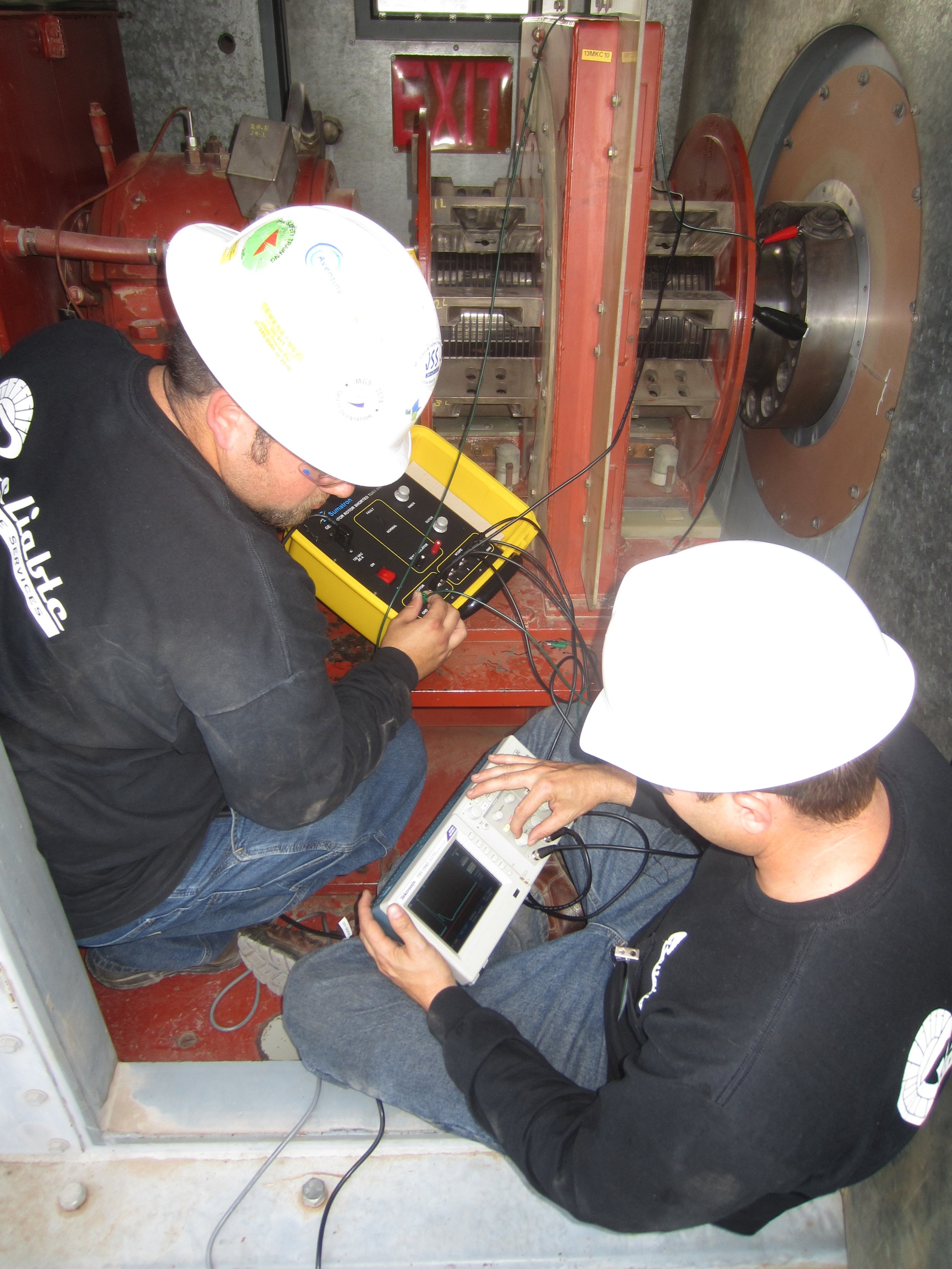
Recurring Surge Oscillography (RSO) test for shorted turns
Hydrogen seal pressure test for leaks
Borescope visual inspection
Additional Capabilities
Consultant services
Root cause analysis
Silver plating (electro-plating) bus work mating surfaces
Stator Services
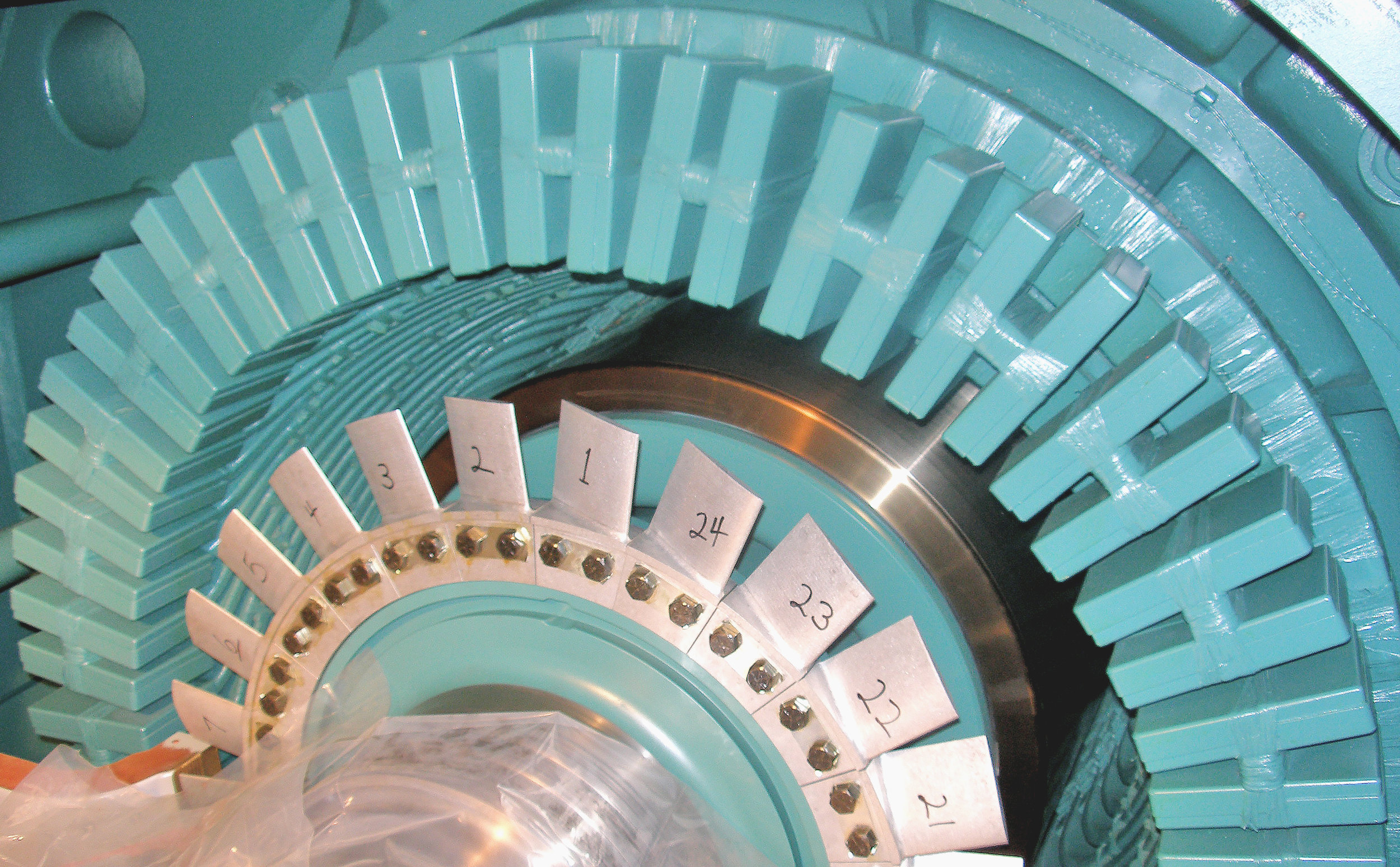
End winding resonance detection and repairs “bump test”
Connection ring / parallel ring re-blocking & re-tying
End winding, re-blocking, & re-tying based on bump test & visual inspection results
End winding stiffening treatment
Corona and partial discharge activity abatement
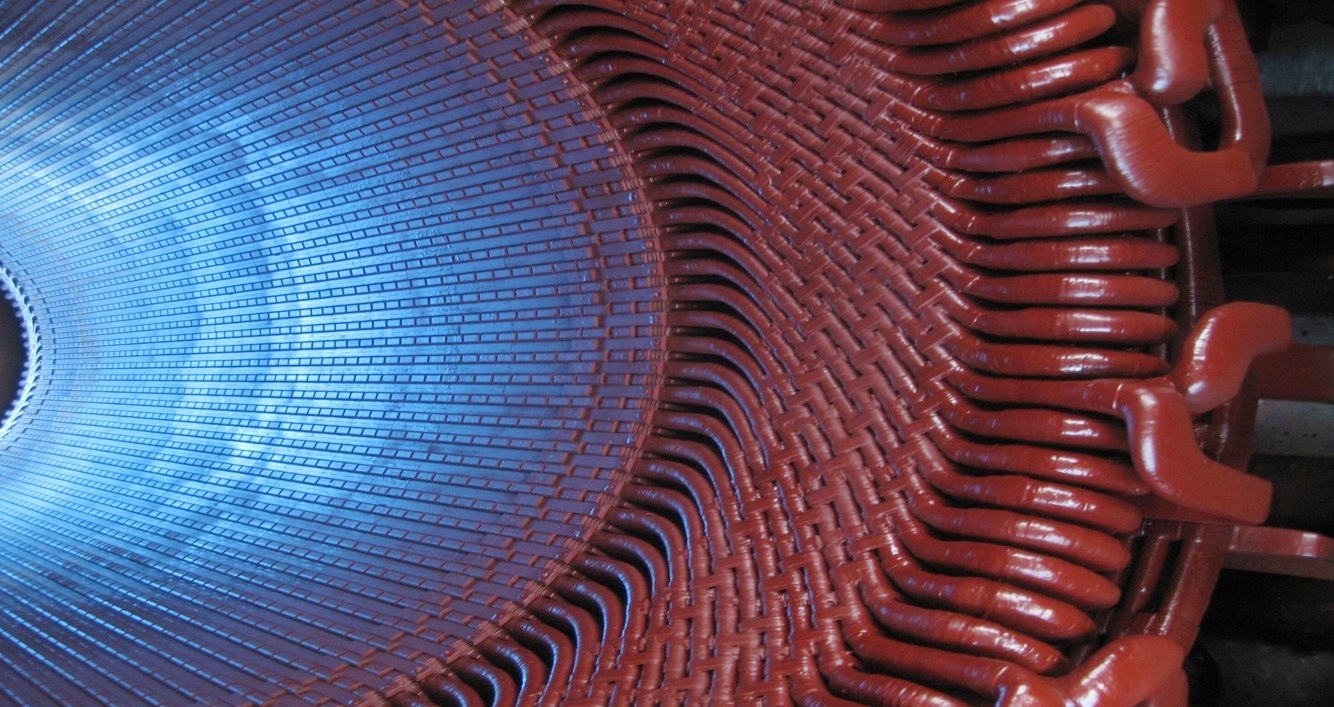
Stator re-wedging
Flux probe installation
Dry ice “CO2” blasting excessively contaminated stators
High voltage bushing replacement
Temporary High voltage bushing & terminal plate leak repairs (“damming”)
Replacement of stand-off insulators
Stator core iron repairs
Stator Testing
Insulation resistance & polarization index (“megger & P.I.”)
DC Leakage test and Hi Pot
ELCID testing for core faults
Digital wedge mapping
Ripple / PSDS spring depth gage testing for wedge tightness
DC resistance testing of each phase
Bump test / modal analysis of end windings & connection rings
Corona camera
Doble / Tan-Delta / Power Factor testing
Thermographic detection of high resistance connections
Westinghouse / MHI inner-cooled unit testing including:
Transposition Testing
Tube to tube resistance test
Tube to copper resistance test
Core through bolt & building bolt torque checks & re-tightening
Megger of through bolts
Parallel ring flow testing
Frequently Asked Questions
How does RTS resolve recurring generator end-winding greasing and dusting issues?
RTS starts with a Bump Test to identify sections of the winding that exhibit resonance near the driving frequency, typically 120 Hz on a 60 Hz machine. Based on the results, we design a fix that can include re-blocking and re-tying to shift the unit's resonance band away from its driving frequency, along with an end-winding stiffening treatment to re-establish the epoxy bond planes and secure loose components.
What Hi-Pot test voltage does RTS recommend for an older generator?
OEMs typically recommend Hi-Pot testing at 1.5x the operating voltage (1.5xE), but for older units, RTS often recommends a more conservative 1.25xE. Testing at a lower voltage reduces risk during testing, while testing at a higher voltage builds greater confidence in future reliability. 1.25xE is usually the right compromise for a generator that has seen years of service.
My generator keeps tripping on field ground alarms. How do I know if it's a real field ground?
Start by isolating whether the issue is in the excitation system or the generator itself. On a brushless unit, RTS isolates the rotating diode wheel from the field winding and tests both sides separately. On a unit with static excitation, we remove all brushes and test the field and buswork independently. From there, RTS has a testing protocol to further investigate whether the issue is actually in the rotor circuit.


